
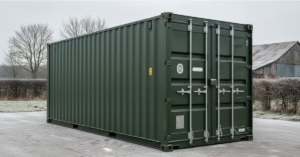
Preparing your shipping container for winter
Winter can cause real problems inside a shipping container if you do not prepare it properly. Condensation, damp and rust are the main issues. Here
Article Written By: Connor Bath
Date: 12/08/2025
✅ Choose a flat, stable location for the container
✅ Check delivery vehicle access and turning space
✅ Decide on your foundation type (slab, pads, sleepers, etc.)
✅ Ensure good drainage to prevent water pooling
✅ Mark out the site before delivery day
✅ Have tools ready for levelling if needed
Shipping containers are built from heavy-duty steel, which makes them incredibly strong, but they still need the right base to sit on. Without proper foundations, the container can settle unevenly, causing the doors to jam or gaps to appear. Moisture can also collect underneath, which can speed up rusting and reduce the container’s lifespan.
Good foundations keep the container stable, level, and lifted off the ground to improve airflow. This helps protect both the structure and anything you store inside. Whether you’re using the container for storage, an office, or a conversion project, a proper base is essential.
Before deciding on your foundation, look at the route the delivery lorry will take. Are there tight turns, low-hanging wires, or overhanging branches? Containers are often delivered using large vehicles with cranes or HIAB systems, so you’ll need enough space for them to manoeuvre and unload safely.
Is the site accessible for large delivery vehicles, such as the ones that will arrive with your new container? You will want to make sure the entrance is wide enough and the ground is stable enough (not sodden etc) to receive a shipping container. For a 20ft container, we use a 35′ long x 9.5′ wide rigid vehicle and for 40ft containers we use a 62′ long x 9.5′ wide rigid vehicle, the site needs to accommodate this in order for the delivery to take place.
Please bear in mind that delivery vehicles can only offload from the side of the vehicle, never the front or back, so enough space for this is imperative, as this is a safety measure that we cannot (and will not) make any exceptions for under any circumstances. Ensure your area is level and has a hard-standing capacity, as it is your responsibility to ensure the site/delivery location is accessible and suitable for HGV deliveries.
The ground must be able to support the full weight of the container, especially when loaded. A standard 20ft container can weigh around 2.3 tonnes empty and over 20 tonnes when full. If the soil is soft, you may need to reinforce it with compacted hardcore or a more substantial foundation. Avoid areas prone to flooding or where water naturally collects, as this can lead to rust and stability problems.
A full concrete slab provides the most stable and durable base. It’s ideal for permanent placements, especially for larger or heavily loaded containers. The slab should be reinforced and at least 150mm thick for most uses. While this is the most expensive option, it requires very little maintenance and keeps the container perfectly level.
Instead of covering the whole footprint, you can place individual pads under the container’s corner castings and, for longer containers, midpoints along the length. This option is cost-effective and works well for both temporary and long-term use. Pads should be level and set on compacted hardcore for stability.
Timber beams or sleepers are quick to install and lift the container off the ground, allowing airflow underneath. They work well for temporary storage or situations where you might move the container later. To avoid rot, choose treated timber and make sure it’s not in direct contact with wet soil.
Ground screws are large metal screws drilled into the soil, creating a strong and level base without heavy excavation. Adjustable feet can be fitted to the container for fine-tuning the height on uneven ground. These are ideal when you need a non-invasive solution or when ground conditions vary across the site.
For lighter-duty setups, a compacted layer of type 1 hardcore topped with paving slabs at key load points works well. This provides stability, drainage, and an even surface for the container to rest on.
Good drainage is just as important as a solid foundation. If water collects under or around your container, it can cause the steel to corrode faster. Lifting the container off the ground and adding gravel or a French drain can help keep the base dry. Where possible, avoid placing the container at the lowest point in your garden or yard.
Even with the best foundations, you may need to make small adjustments when the container arrives. A slight tilt can cause the doors to jam or not seal properly, which can lead to water ingress. Before the delivery vehicle leaves, check the container with a spirit level both side-to-side and front-to-back.
If adjustments are needed, you can:
Use timber shims or hardwood blocks under the corner castings or midpoints.
Place steel packing plates for a longer-lasting solution, especially in commercial or high-traffic settings.
Install adjustable screw jacks under the corners if you expect seasonal ground movement.
Add levelling pads designed for heavy plant and machinery, which give a solid and stable lift.
If the container is on soil or gravel, settling may occur over the first few weeks. Recheck the level after a few days, and again after heavy rain, adjusting as necessary to keep the container stable and the doors operating smoothly. Regular checks are especially important if the container will be in place for years, as even minor shifts can create bigger problems over time.
Placing the container directly on grass or bare soil
Forgetting to check that the base is level before delivery
Ignoring drainage in wet areas
Only supporting the container at the corners without midpoints for longer units
Skipping a ground survey for soft or uneven sites
Choose the most suitable foundation type for your site and usage
Prepare the ground and ensure good drainage
Mark out the container’s footprint before delivery
Check access routes for the delivery vehicle
Have levelling tools ready on delivery day
A shipping container is a big investment, and the right foundations will keep it secure, level, and protected from moisture. Whether you opt for a concrete slab, simple pads, or a temporary timber base, proper preparation will save you time, money, and hassle in the long run.
If you’re unsure which foundation option is best for your site, get in touch with our team. We can talk you through your options and help arrange a smooth delivery from start to finish.
Not always. A concrete slab is the most durable and long-lasting option, but for many storage or short-term uses, concrete pads, railway sleepers, or a hardcore base can work just as well. The right choice depends on how long you’ll keep the container in one place, the weight it will carry, and the condition of your ground.
It’s not recommended. Placing a container directly on soil or grass can cause it to sink, tilt, or rust faster due to trapped moisture. Raising it on a proper base improves airflow and stability.
As level as possible. Even small slopes or dips can cause the container’s doors to stick or gaps to form. A spirit level check before and after delivery helps make sure it sits evenly.
Concrete pads or treated timber sleepers are often the most cost-effective. They lift the container off the ground, provide good support, and are easy to install without large construction work.
An empty 20ft container weighs around 2.3 tonnes, and a fully loaded one can exceed 20 tonnes. The ground must be strong enough to support this without sinking, especially under each corner where most of the weight rests.
Yes, but the gravel should be compacted and level. Often, gravel is combined with concrete pads or paving slabs under the corners for extra stability and to spread the load evenly.
Usually 150–200mm (6–8 inches) is enough to allow air circulation underneath and keep the base dry. This also makes it easier to inspect and maintain the underside.
Generally, foundations themselves don’t require permission, but the container might depend on its size, location, and intended use. Always check with your local council before installing.
Winter can cause real problems inside a shipping container if you do not prepare it properly. Condensation, damp and rust are the main issues. Here

A shipping container could be the simple solution when you need a little more space
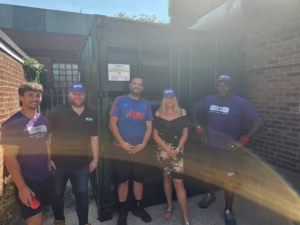
We delivered a 10ft shipping container this week to The Crafty Cockney Pie & Mash on Canvey Island. They’re a family run traditional East End
Posted on Google
 James Hayden
Trustindex verifies that the original source of the review is Google.
The only Most Way About c4sale Ltd Limited Edition In India and Europe And ViaPosted on Google Ken MillsA pleasure to deal with from start to finish with Sam making the transaction as smooth as it could be. The container arrived on the day and was perfect for the job.Posted on Google
 musky aliExcellent friendly service, highly recommended, pulse the delivery guys were so kind and helpful . Couldn’t be more grateful to use this company for my containers.Posted on Google
 Brendon WhiteheadVery pleased with the service and was happy with the container thank you guysPosted on Google
 T CAs a business we have purchased 6 containers from Containers 4 Sale UK. I dealt with Josh from start to finish. He was helpful all the way through the process and kept me updated of ETA of delivery. Excellent service. If we need any more I will definitely be coming here.Posted on Google
 Fernando SilvaGood customer service. Delivered when needed and in time. RecommendedPosted on Google
 Jack BotteschI cannot recommend Bobby from C4S highly enough. From start to finish, he provided exceptional service that truly exceeded our expectations. Bobby's communication was impeccable - he kept us informed every step of the way, ensuring we knew exactly when to expect our delivery. Not only did Bobby offer the most competitive price for our containers, but he also went above and beyond to ensure we were completely satisfied with our purchase. His attention to detail and dedication to customer satisfaction truly sets him apart. Our container needs were met seamlessly. We are incredibly impressed with the service provided and will definitely be contacting Bobby again for our next round of containers. If you're looking for a reliable, trustworthy supplier, look no further.Posted on Google
 Tamsin FaircloughHi there, we were recommended Containers 4 Sale by a friend, and I am so so glad we were. We purchased 3 containers which are now in situ, all was arranged by Bobby Addis who was extremely helpful, knowledgeable and polite. The haulage company arranging the drop were also extremely good. We have used other container companies but I would highly recommend Bobby over and above any other company. Thank you,Posted on Google
 Paul WaglandGood honest service, fair price, punctual delivery. I would happily recommend this company.Posted on Google
 Dave SummerHad a 20 foot container delivered to our yard. Delivery was smooth and driver was ever so helpful, and the staff at Containers 4 sale were professional. Thanks to Josh for helping me through my order process.Load more
