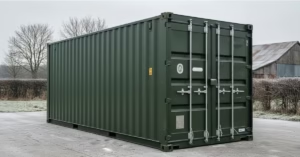
Preparing your shipping container for winter
Winter can cause real problems inside a shipping container if you do not prepare it properly. Condensation, damp and rust are the main issues. Here
Article Written By: Bobby Addis
Date: 01/11/2024
Shipping and storage containers are generally considered portable structures. While they don’t have wheels like caravans or mobile homes, they can be easily moved and don’t require permanent foundations. Because they’re not designed to be fixed in one location long term, they usually fall outside the scope of planning permission.
That said, some local authorities apply additional restrictions — even for temporary structures like shipping containers. This is more common in sensitive areas such as National Parks or Areas of Outstanding Natural Beauty.
To avoid complications, it’s always best to check with your local planning authority before placing a container on your property. Local rules can vary, and seeking advice in advance helps ensure a smoother process and prevents unexpected costs.
Not sure who your local authority is? Just enter your postcode on the Planning Portal to find out quickly.
As the general rule of thumb is that it is usually unnecessary to seek planning permission for a temporary structure, such as a shipping or storage container to be placed on your property, the question is easier to flip to answer when you should seek permission.

Winter can cause real problems inside a shipping container if you do not prepare it properly. Condensation, damp and rust are the main issues. Here

A shipping container could be the simple solution when you need a little more space

We delivered a 10ft shipping container this week to The Crafty Cockney Pie & Mash on Canvey Island. They’re a family run traditional East End