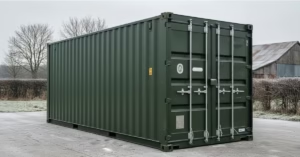
Preparing your shipping container for winter
Winter can cause real problems inside a shipping container if you do not prepare it properly. Condensation, damp and rust are the main issues. Here
Article Written By: Bobby Addis
Date: 01/11/2024
Start by considering the type and quantity of cargo you need to transport. Different goods have different size, weight, and condition requirements – for instance, some may need refrigeration. Bulk goods might suit larger containers, while fragile items may be better in smaller units for easier handling.
Carefully assess your cargo’s specific needs before selecting a container.
Knowing the internal dimensions of a container is essential to understand how much it can hold. This ensures you can load your goods efficiently and, if necessary, plan for additional packing measures.
For full details, see our [complete guide to container dimensions].
To determine the freight volume, multiply the container’s internal length, width, and height. Then calculate the total volume of your goods by adding the individual volumes together. This will help you choose a container that comfortably accommodates your cargo.
While 20ft and 40ft containers are common, many options exist beyond size alone. Some containers feature refrigeration for perishables or side access for loading larger items.
It’s important to weigh up features alongside volume and dimensions to ensure your cargo is properly protected.
With your cargo requirements, container dimensions, and preferred features in mind, you can confidently select the best container. Don’t forget to also factor in your budget, necessary safety measures, and the container’s compatibility with your transport and storage methods.

Winter can cause real problems inside a shipping container if you do not prepare it properly. Condensation, damp and rust are the main issues. Here

A shipping container could be the simple solution when you need a little more space

We delivered a 10ft shipping container this week to The Crafty Cockney Pie & Mash on Canvey Island. They’re a family run traditional East End